World News True

This is default featured slide 1 title

Go to Blogger edit html and find these sentences.Now replace these sentences with your own descriptions.This theme is Bloggerized by NewBloggerThemes.com.

This is default featured slide 2 title

Go to Blogger edit html and find these sentences.Now replace these sentences with your own descriptions.This theme is Bloggerized by NewBloggerThemes.com.

This is default featured slide 3 title

Go to Blogger edit html and find these sentences.Now replace these sentences with your own descriptions.This theme is Bloggerized by NewBloggerThemes.com.

This is default featured slide 4 title

Go to Blogger edit html and find these sentences.Now replace these sentences with your own descriptions.This theme is Bloggerized by NewBloggerThemes.com.

This is default featured slide 5 title

Go to Blogger edit html and find these sentences.Now replace these sentences with your own descriptions.This theme is Bloggerized by NewBloggerThemes.com.

Friday, August 11, 2017

Trump warns N Korea that US military is 'locked and loaded'


President Donald Trump says the US military is "locked and loaded" to deal with North Korea, ramping up the rhetorical brinkmanship.
"Military solutions are now fully in place, locked and loaded, should North Korea act unwisely. Hopefully Kim Jong-un will find another path!" he tweeted.
He spoke as Pyongyang accused him of "driving" the Korean peninsula to the "brink of a nuclear war".
North Korea has announced plans to fire missiles near the US territory of Guam.
The Pacific island's homeland security agency issued a fact sheet on Friday with tips for residents to prepare for any missile threat.
It states: "Do not look at the flash or fireball - it can blind you."
"Lie flat on the ground and cover your head. If the explosion is some distance away, it could take 30 seconds or more for the blast wave to hit."

Moscow said the exchange of threats between Washington and Pyongyang "worry us very much".
Foreign Minister Sergei Lavrov rated the risk of military conflict as "very high" as he put forward a joint Russian-Chinese plan to defuse the crisis.
German Chancellor Angela Merkel said there was no military solution, and "an escalation of the rhetoric is the wrong answer."
But later on Friday, at his private golf club in New Jersey, Mr Trump issued further threats to Pyongyang.
Asked about his "locked and loaded" tweet, he told reporters: "I hope that they [North Korea] are going to fully understand the gravity of what I said, and what I said is what I mean… those words are very, very easy to understand."
He added: "If he [Kim Jong-un] utters one threat in the form of an overt threat - which, by the way, he has been uttering for years, and his family has been uttering for years - or if he does anything with respect to Guam or anyplace else that's an American territory or an American ally he will truly regret it and he will regret it fast."
Mr Trump's latest remarks follow his threat earlier this week to rain "fire and fury" on Pyongyang.

His latest post came hours after his Defence Secretary Jim Mattis attempted to cool tensions by emphasising a peaceful resolution to the crisis.
Speaking in California late on Thursday, the Pentagon chief said it was his job to be ready for conflict.
But he said the effort by Secretary of State Rex Tillerson and UN Ambassador Nikki Haley "has diplomatic traction, it is gaining diplomatic results".
Mr Mattis added: "The tragedy of war is well enough known. It doesn't need another characterisation beyond the fact that it would be catastrophic."
When asked about US military plans for a potential conflict, he said the country was ready, but he would not "tell the enemy in advance what I'm going to do".
Also on Friday, North Korea's official KCNA news agency accused Washington of a "criminal attempt to impose nuclear disaster upon the Korean nation".
Pyongyang's media outlet said America was making "desperate efforts" to test weapons in the Korean peninsula.
The US is "the mastermind of nuclear threat, the heinous nuclear war fanatic", the report said.
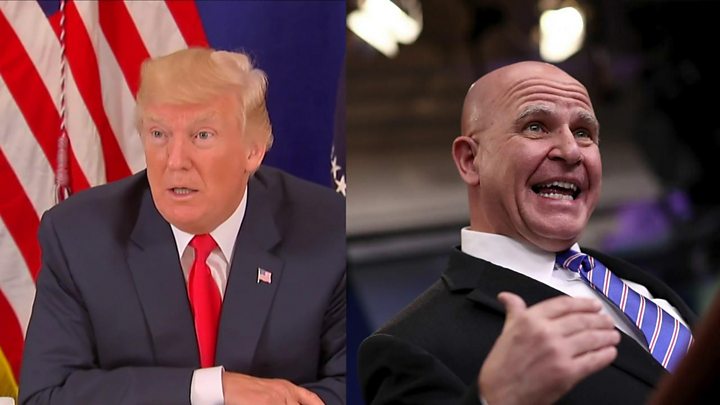
Media captionWho's in Trump's good and bad books?
Despite the rhetoric from both sides, the Trump administration has been conducting behind-the-scenes diplomacy with North Korea for several months, the Associated Press news agency reports.
Washington has been addressing the issue of Americans detained in the country and escalating tensions on the peninsula, according to AP.
Joseph Yun, the US envoy for North Korea, and Pak Song-Il, a senior North Korean diplomat at the UN, are said to be leading the talks.
Tensions have risen since North Korea tested two intercontinental ballistic missiles in July.
The regime was further angered by last week's UN decision to increase economic sanctions against it.
North Korea said it was finalising a plan to fire medium-to-long-range rockets towards Guam, where US strategic bombers are based, along with more than 160,000 US citizens.
There has been no indication that any actual attack on the Pacific island is imminent.
On Thursday Mr Trump suggested that his own statements on North Korea had not been tough enough, warning the regime to be "very, very nervous
However, he added that the US would always consider negotiations.
He also chided the North's closest ally, China, saying it could do "a lot more".
China's state-run Global Times newspaper wrote that Beijing should stay neutral if North Korea launches an attack that threatens the US.
But it also said that if the US and South Korea attacked North Korea to force regime change, then China must intervene to prevent it.
Meanwhile, Australian Prime Minister Malcolm Turnbull said his nation would be prepared to join a conflict against North Korea if the US came under attack.
Australia would honour its commitment under a 1951 treaty, he said, "as America would come to our aid if we were attacked".
Share:

Gundelik Burcler 11 08 2017

Share:

Sunday, February 26, 2017

Saturday, February 25, 2017

Sunday, February 5, 2017

Romania to withdraw corruption decree after mass protests

The Romanian government says it will withdraw a controversial decree that would have decriminalised some corruption offences.
Prime Minister Sorin Grindeanu said it would be repealed on Sunday.
"I do not want to divide Romania. It can't be divided in two," Mr Grindeanu said in a televised statement.
Tens of thousands of flag-waving protesters in central Bucharest cheered his announcement, which came after five consecutive days of demonstrations.
The protests in the eastern European country against the decree have been the largest since the fall of communism in 1989.
Mr Grindeanu said he "heard and saw many opinions", including from "the voice of the street". He said that parliament will now debate a new corruption law.

Rallies outside parliament

The decree was meant to come into force at midnight on 10 February.
It would have decriminalised abuse of power offences when sums of less than €44,000 (£38,000; $47,500) are involved.
One immediate beneficiary would have been Liviu Dragnea, who leads the ruling PSD party and faces charges of defrauding the state of €24,000.
The leftist government only returned to power in December after protests forced its last leader from power in October 2015.
The EU had warned Romania against undoing its progress against corruption.
The government passed the decree on Tuesday, immediately sparking protests, which involved an estimated 300,000 people on Wednesday evening.
It said the changes were needed to reduce prison overcrowding and align certain laws with the constitution.
But critics saw it as a way for the PSD to absolve officials convicted or accused of corruption.
"The damage it will do, if it comes into force, can never be repaired," Laura Kovesi, chief prosecutor of the National Anti-Corruption Directorate had told the BBC
One of the demonstrators, Cristian Busuioc, explained why he had come out on the streets with his 11-year-old son.
"I want to explain to him ... what democracy means, and the way the ones who govern must create laws for the people and not against them or in their own interest," he told the Associated Press.
Share:

Pakistan thanks India for returning boy to mother


 A five-year-old boy who was taken from Pakistan to India by his father nearly eleven months ago has been reunited with his mother.
Iftikhar Ahmad was received by Pakistani officials on the main border between the neighbouring regions on Saturday.
His father, Gulzar Ahmad Tantray, took him to India last year on the pretext of attending a wedding.
Pakistan has thanked India for returning Iftikhar.
"I had lost all hope of getting my child back," Iftikhar's mother Rohina Kayani told reporters, describing it as a "miracle".
"I am thankful to the Pakistani government for its help," she said.
Ms Kayani lives in Pakistani-administered Kashmir, while Mr Tantray now lives in Indian-administered Kashmir.

Iftikhar became the centre of a controversy between India and Pakistan when Mr Tantray was arrested in March 2016.
Mr Tantray, who grew up in a village in Ganderbal, crossed over to Pakistan-administered Kashmir in 1990, allegedly for arms training at the peak of the insurgency against Indian rule.
He returned to India-administered Kashmir with Iftikhar, where he was taken into police custody.
At the time, Rohina Kayani accused her husband of abducting the child and running away to the Indian side. Mr Tantray and his family have denied charges of kidnapping.
Share:

Wednesday, February 1, 2017

Trump picks Neil Gorsuch as nominee for Supreme Court


President Donald Trump has nominated Colorado federal appeals court judge Neil Gorsuch for the US Supreme Court.
If confirmed by the Senate, the 49-year-old would restore the court's conservative majority, lost with the death of Justice Antonin Scalia.
The Senate Democratic leader has said he has "very serious doubts" about Judge Gorsuch's nomination.
The court has the final legal word on many of the most sensitive US issues, from abortion to gender to gun control.
Mr Trump said Judge Gorsuch had a "superb intellect, an unparalleled legal education, and a commitment to interpreting the Constitution according to text".
"Judge Gorsuch has outstanding legal skills, a brilliant mind, tremendous discipline, and has earned bipartisan support," Mr Trump said.
He was picked from a shortlist of 21 choices, which Mr Trump made public during the election campaign.
Accepting the nomination, he said: ""It is the role of judges to apply, not alter, the work of the people's representatives. A judge who likes every outcome he reaches is very likely a bad judge, stretching for results he prefers rather than those the law demands."
Judge Gorsuch is a so-called originalist, meaning he believes the US Constitution should be followed as the Founding Fathers intended.
If successful, his nomination will restore the 5-4 conservative majority on the nine-seat high court.
Protests against Mr Trump's choice were held outside the Supreme Court following the announcement.

More on this story


Where does Judge Gorsuch stand on key issues?

Abortion: He has not spoken out about Roe v Wade, the case which legalised abortion nationwide in 1973, making in difficult to pin down where he stands on the issue.
Birth control: Judge Gorsuch has supported religious institutions which objected to requirements for employers to provide access to contraception. In one of his most high-profile cases, he defended the religious owners of retailer Hobby Lobby who refused to fund birth control via staff health insurance.
Gun rights: He hasn't ruled directly on firearms restrictions, but is thought to be generally pro-second amendment. He once wrote in a legal opinion that a citizen's right to bear arms "must not be infringed lightly".
Euthanasia: He has been vocal about assisted dying, writing a book in 2009 which opposed legalisation.

A conservative's dream: Anthony Zurcher, North America Reporter
Donald Trump's choice of Neil Gorsuch as his Supreme Court nominee is a fairly traditional pick in a decidedly untraditional time.
Judge Gorsuch has a CV and background that would make him a natural selection for just about any Republican president.
He's the kind of Supreme Court nominee evangelical and traditional conservative voters dreamed of as a reward for sticking with Mr Trump through the general election despite campaign missteps, controversies and occasional political apostasies.
They knew they would get a court pick they wouldn't like if Hillary Clinton won. They hoped they would get someone like Judge Gorsuch if Mr Trump prevailed.
Meanwhile, Democrats are left fuming over Senate Republicans' precedent-breaking decision to stymie Barack Obama's attempts to fill this court vacancy for nearly 10 months.
They have to decide if they will try to derail Mr Gorsuch's nomination as retribution - perhaps forcing Republicans to break with another Senate tradition, the ability of a minority to a block a Supreme Court nominee with only 41 votes through a filibuster.
The party's base, feeling a liberal majority on the court was stolen from them, will demand lockstep resistance, likely setting up a divisive confirmation fight ahead.

Can Democrats block the nomination?

Judge Gorsuch's nomination is expected to spark a political showdown in the Senate.
Former President Barack Obama had put forward Judge Merrick Garland after Justice Scalia's death last February.
But Republicans refused to debate the choice, saying it was too close to an election, which left Democrats embittered.
Even if Judge Gorsuch makes it through the Senate Judiciary Committee, he will still face challenges when the entire chamber convenes for a final vote.
Democrats may seek to prevent that second vote by prolonging or filibustering the debate. In that case, the nomination would need 60 votes rather than a simple majority.
With Republicans only holding 52 Senate seats, they may have to change Senate rules in order to approve Mr Trump's nominee.

Why is the choice so important?


The highest court in the US is often the ultimate arbiter on highly contentious laws, disputes between states and the federal government, and final appeals to stay executions.
It hears fewer than 100 cases a year and the key announcements are made in June.
Each of the nine justices serves a lifetime appointment after being nominated by the president and approved by the Senate.
The court already has cases this term on the rights of transgender students, gerrymandered voting districts and on the Texas death penalty determination.
It is also likely the court will hear cases on voter rights, abortion, racial bias in policing and US immigration policy, and possibly on Mr Trump's controversial executive order banning refugees.

Other Trump developments

Share:

World News True

Free Money

Reklam

Blog Archive

Recent Posts

Unordered List

Definition List